
TruLight Blog
RGB vs RGBW Permanent Lighting: Which Is Better for Your Home?
RGB and RGBW describe different ways to produce colored and white light. An RGBW fixture adds a dedicated white channel. When choosing permanent outdoor lighting, compare that white setting as carefully as the holiday colors.
RGB: how most permanent lights produce color
RGB stands for red, green, and blue. Mixing those channels at different intensities produces other colors, including a white setting. Red and green can make yellow; blue and green can make cyan.
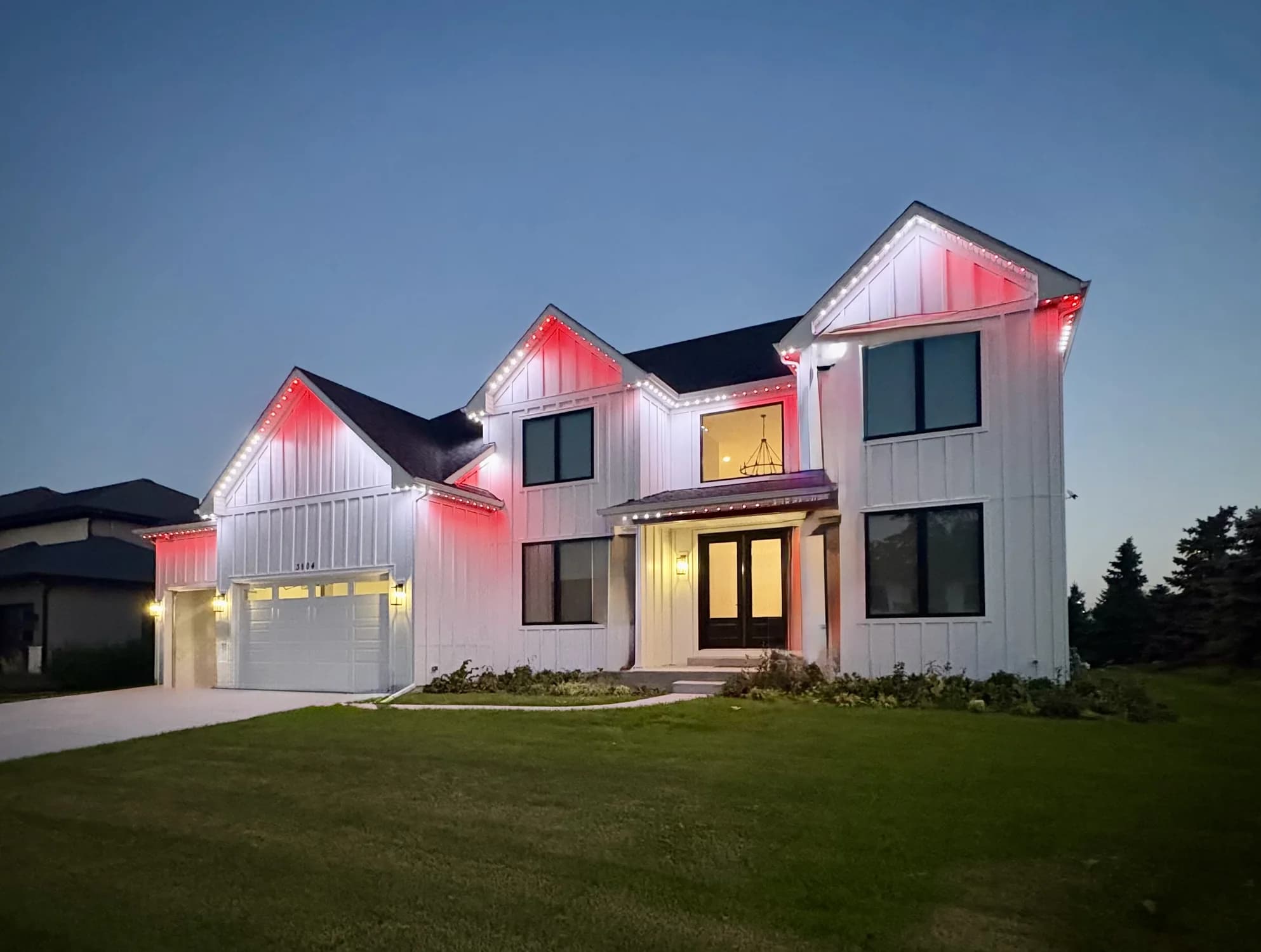
The appearance of mixed white depends on the LEDs and their balance. In our comparisons, some RGB fixtures show a blue or violet tint against warm exterior materials. View the setting on the actual product rather than assuming all white settings look alike.
Holiday colors are useful to compare, but include the light you want on ordinary evenings. Ask the dealer to show white at your intended brightness.
RGBW and the dedicated white channel
RGBW adds a dedicated white channel, so the fixture can produce white without relying only on the RGB mix.
TruLight’s fixture has six LEDs: three RGB and three dedicated warm white. The white channel can be used on its own or with the color channels.
- Dedicated white: The white LEDs provide a warm white setting independently of the RGB channels.
- Combined channels: RGB and white can be used together for other settings.
- Fixture output: Compare the actual brightness at the settings you want to use.
Choosing white for everyday lighting
Warm white is one option for everyday lighting. Colors can be saved for holidays or events, depending on how you prefer to use the system.
Look at the default scene you will use most often. A short demonstration of that setting can tell you more than cycling quickly through bright colors.
Try the lights against stone, stucco, siding, or wood similar to your exterior. The surface color changes how the light appears.
If you expect to use white most evenings, make its appearance part of the buying decision.
The brightness gap
LED count is only part of the brightness comparison.
Fixture output also depends on the LEDs, their drive current, and the optics. Six LEDs do not, by themselves, establish a fixed brightness multiple over another fixture.
Ask a TruLight dealer about viewing an installed system. Compare the intended settings from the street as well as close to the house.
Wondering what it would cost for your home? Get an instant estimate using our satellite tool. No visit required.
Get Your Free QuoteWhat about cost?
Compare installed quotes rather than assuming an RGBW label determines the price. Check the controller, track, accessories, and support included with each system.
Include these items in the comparison:
- The white setting against your exterior materials
- Brightness and dimming on the actual fixture
- App controls and the included controller
- Written warranty terms and product ratings
TruLight offers a limited lifetime warranty on the lighting modules and control box of dealer-installed systems. Read the warranty terms for the coverage period, registration, claims and exclusions.
How to tell the difference before you buy
Ask each installer to set the display to white and view it from about 20 to 30 feet away. Compare the setting you would use on an ordinary evening.
Appearance alone does not identify the LED arrangement. If you prefer one white setting, ask how that fixture produces it and whether the setting can be adjusted.
A demonstration on similar exterior materials is useful. White vinyl, sandstone, and wood can show the same lighting differently.
Frequently asked questions
Can RGB lights be adjusted to look warmer?
RGB controls let you adjust the balance of red, green, and blue. Whether you like the resulting white depends on the fixture and setting. Compare it with a dedicated white channel in person.
Do RGBW lights cost more to run?
Consumption depends on power draw, brightness, active channels, and hours of use. Ask for a documented or measured estimate for the settings you plan to use.
Is RGBW better for security lighting too?
A dedicated white channel offers another white-light option for motion response. Ask to see the brightness and zone settings you would use. Lighting should not be treated as a guarantee of deterrence.
Will I notice the difference on a painted or vinyl-sided home?
You may notice a different effect on white siding than on warm-toned stone or wood. A demonstration on similar materials is the best way to judge your preference.
Related articles
- TruLight vs. Trimlight vs. JellyFish: An Honest Comparison
- Designing Architectural Lighting for Stone and Stucco Homes
A local TruLight dealer can show you the available white settings. View them on a home with materials similar to yours and take photos to help compare.