Sourced Product Comparison
TruLight vs Astoria Lighting
Astoria's own HOA packet identifies its roofline product as Gemstone Lights, and its current materials publish a real RGB-WW system with dedicated warm white. TruLight's advantage is the combination of 48V power, six emitters per light, and substantially higher published output.
Specifications and policies checked August 23, 2026. Product packages and local contracts can change.
The short answer
We would start with TruLight for a large home, a long roofline, or a buyer who wants brighter architectural lighting. We would take Astoria seriously when its local service history, written labor coverage, or price makes it the lower-risk purchase. Both deserve an in-person nighttime demonstration.
TruLight: 48V and high output
TruLight publishes 90 to 120 lumens per light from six emitters, with 48V distribution designed for longer runs.
Astoria: strong service terms
Astoria publishes limited lifetime bulb coverage, 10 years on installed parts, and 3 years on labor/service.
Both: real warm white
Astoria has true 2800K RGB-WW. TruLight uses three dedicated warm-white emitters alongside three RGB emitters.
Published specs, side by side
These are manufacturer and installer-published figures, not results from one independent laboratory test. Output can also change with spacing, color, brightness setting, optics, and installation height.
| Feature | TruLight | Astoria |
|---|---|---|
| Published product relationship | TruLight system | Astoria's HOA packet identifies the roofline product as Gemstone Lights |
| System voltage | 48V | 12V in Astoria's published HOA packet |
| Light design | 3 RGB emitters plus 3 dedicated warm-white emitters | 3 RGB-WW LEDs per light |
| Published output per light | 90 to 120 lumens | Up to 23 lumens |
| Dedicated warm white | Yes, dedicated warm-white emitters | Yes, published at 2800K |
| White-light options | Dedicated warm white plus a pure-white mode that blends all 6 emitters | Dedicated 2800K warm white; app also supports bright-white settings |
| Published LED rating | 100,000 hours | 50,000 hours |
| Track | Color-matched aluminum track | Color-matched, powder-coated aluminum track |
| Published warranty summary | Limited lifetime on lighting modules and control box; see warranty page | Limited lifetime bulb coverage, 10 years on installed parts, and 3 years on labor/service. |
| Published pricing | Quoted by the local certified dealer | $20 to $26 per foot, plus $250 to $450 for controller and power supplies |
The hardware difference
Astoria's published material says each light contains three RGB-WW LEDs and produces up to 23 lumens. It also publishes true warm white at 2800K, so Astoria should not be described as an RGB-only system.
TruLight uses six emitters per light: three RGB and three dedicated warm-white emitters. TruLight publishes 90 to 120 lumens per light and a 100,000-hour LED rating. Both systems offer warm white. TruLight also has a pure-white mode that blends all six emitters. TruLight co-owner Tom Porter says pure white is the setting customers most often tell him they use. This is owner-reported feedback, not app telemetry.
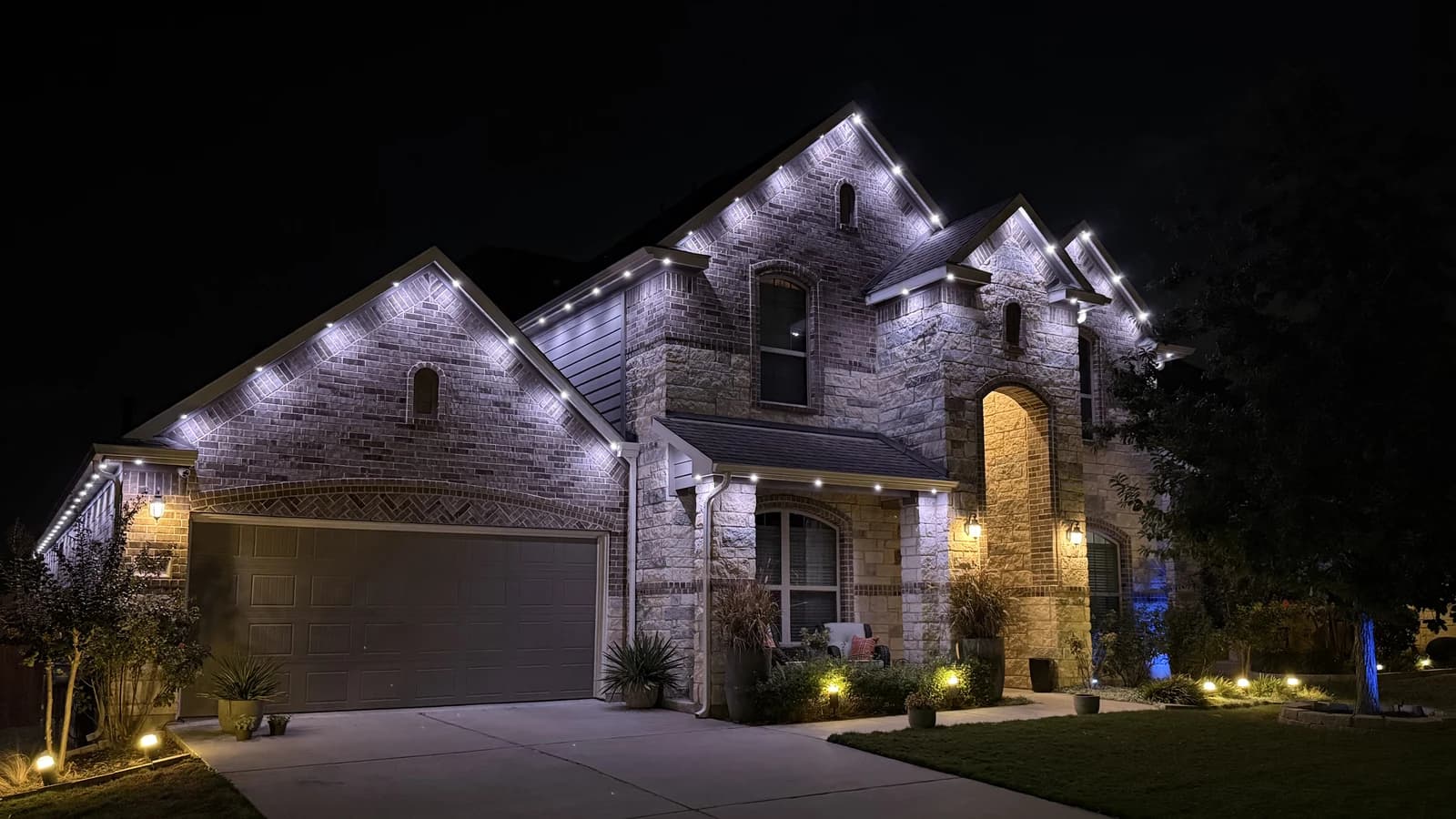
Voltage matters most as rooflines get longer. Astoria's HOA packet describes a 12V system. TruLight runs at 48V, which carries the same wattage at one quarter of the current, so a long roofline can need fewer power injection points and a simpler install.
How Bowdrie's Gemstone video applies
Bowdrie's hands-on TruLight vs Gemstone video is relevant because Astoria's own packet identifies Gemstone Lights as its roofline product. The video directly compares the 12V architecture, three-LED design, track, white-light behavior, voltage, power layout, and app experience of the Gemstone sample available for that test.
We do not automatically carry every older Gemstone finding into a current Astoria quote. Astoria now publishes RGB-WW lights with 2800K warm white, and its 2026 controller manual shows updated white presets and controller software. Claims about chip model, wiring, pattern count, zoning, power injection, or white-light limits should be tied to the exact package in the quote or retested side by side.
Useful video chapters: white light at 4:12, voltage at 9:34, the visual comparison at 15:03, and the app at 18:48.
Low-profile diffuser vs protruding puck
Gemstone presents the protruding puck as a selling point. In a current dealer walkthrough, the installer explains that the puck extends beyond the track so light can shine from the top and around the bulb. The tradeoff is that more of the light remains visible when the system is off.
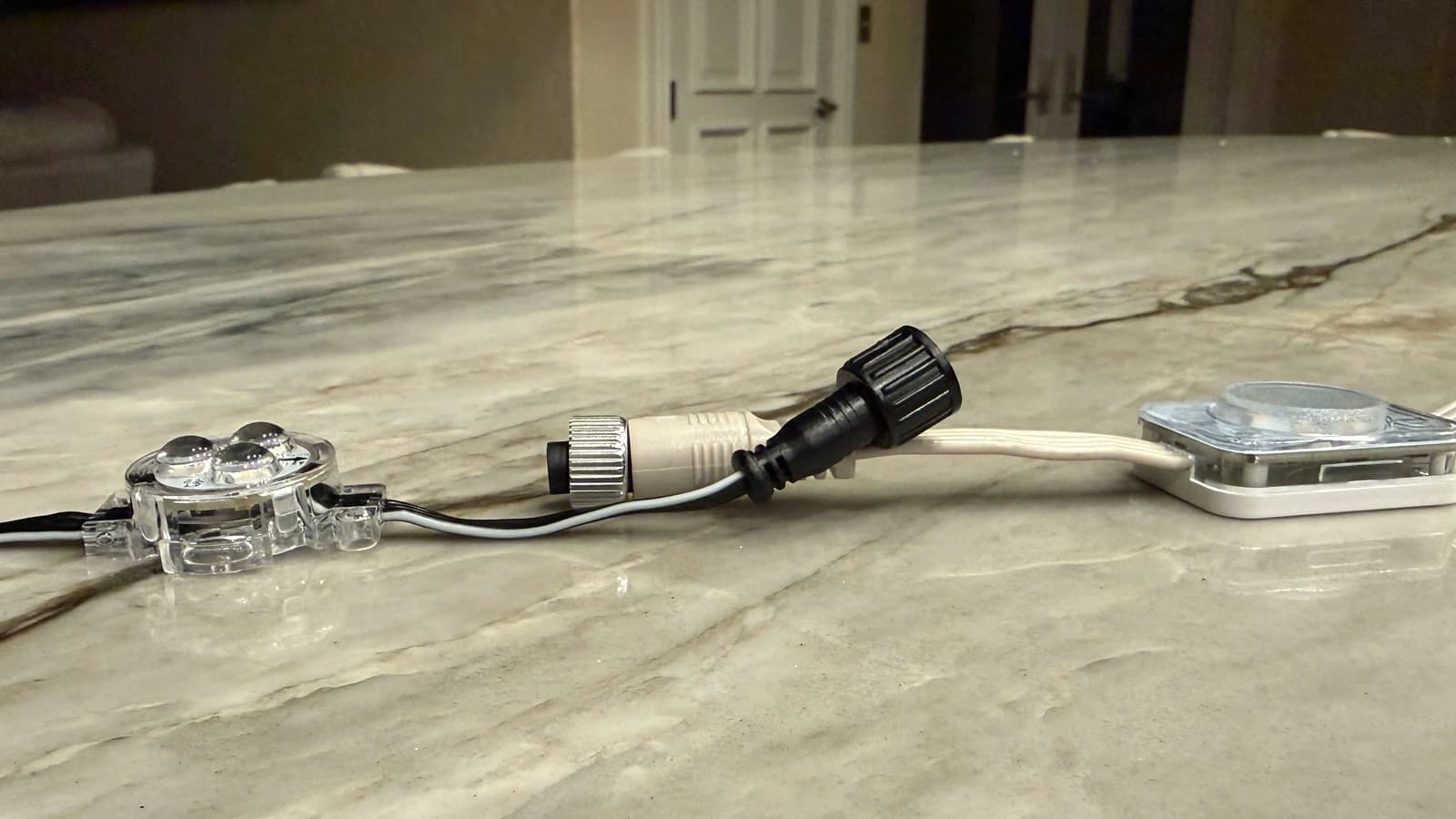
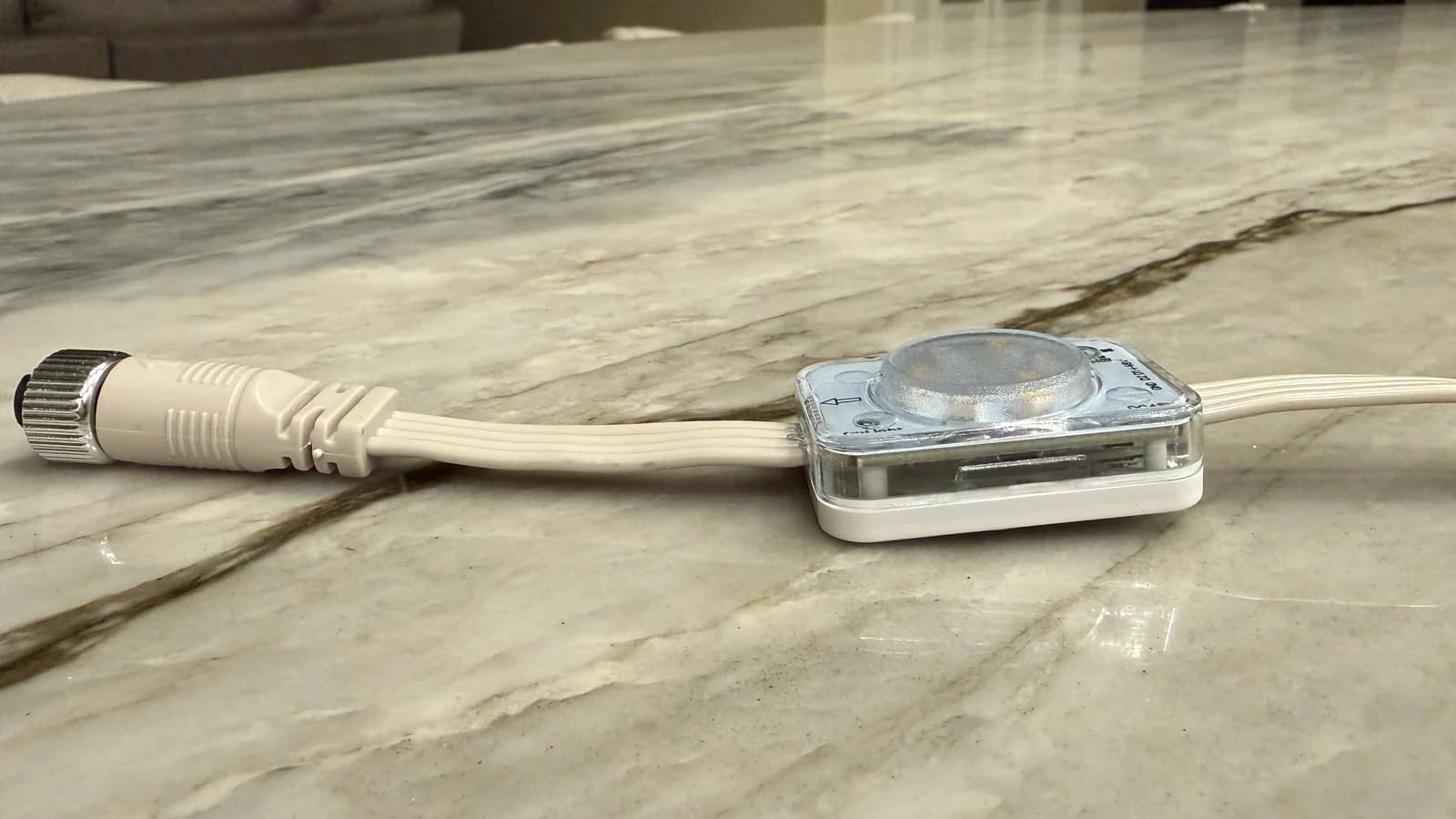
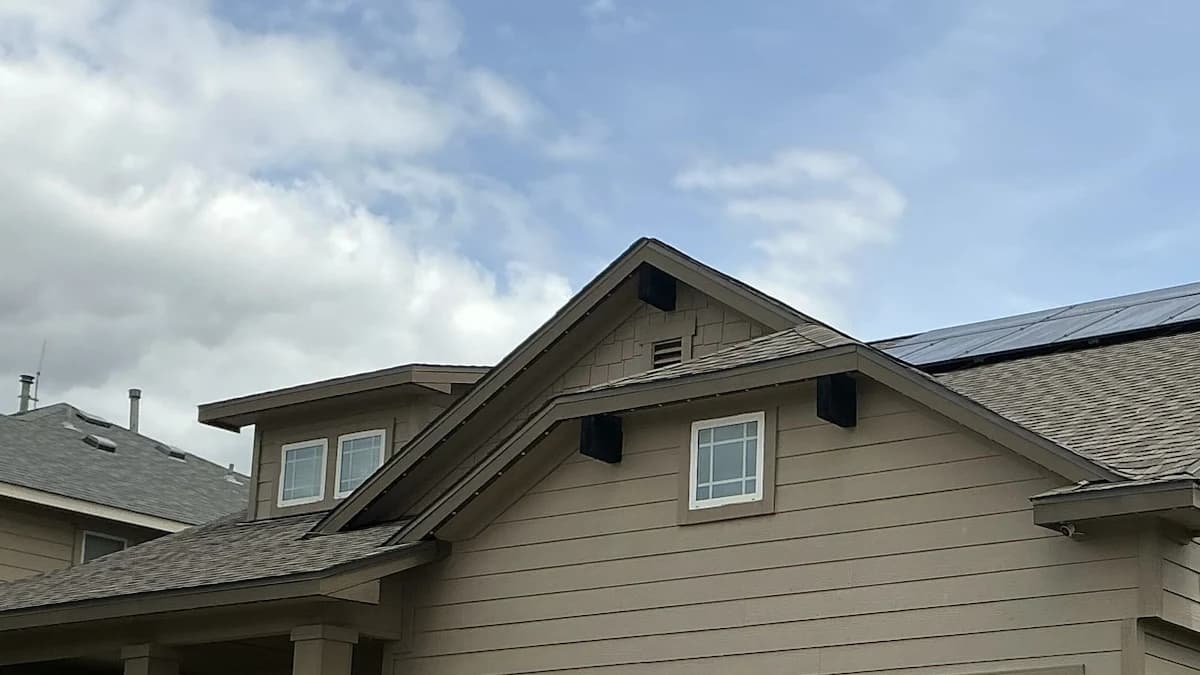
TruLight uses a lower-profile puck with a diffuser that softens and spreads the beam. The track can sit against the front edge of the fascia so the two surfaces read as one continuous line. The exact fit still depends on the soffit, fascia, roof geometry, and installer.
One TruLight customer told us she chose TruLight even though her quote was higher after comparing it with an Astoria installation on a neighbor's home. Her deciding factor was the way the TruLight track met the fascia. She preferred that look over the visible setback on the nearby installation.
TruLight's six-emitter design helps explain its higher published output. The 48V architecture separately means fewer power injection points on long roofline runs. TruLight publishes 90 to 120 lumens per low-profile diffused light, while Astoria publishes up to 23 lumens per light. A close daytime view and a matched nighttime test show the difference more clearly than either number alone.
Watch the Gemstone dealer explain the protruding puck designWarranty and price deserve equal weight
Astoria publishes one of the clearer service packages in this category: limited lifetime coverage on bulbs, 10 years on installed parts, and 3 years on labor/service. Its current site also publishes a typical range of $20 to $26 per linear foot, plus $250 to $450 for controllers and power supplies. The exact range varies across Astoria pages and by season.
TruLight publishes a limited lifetime warranty on the lighting modules and control box of systems installed by an authorized dealer. Project pricing comes from the selling dealer. Before choosing either company, put the complete written quote next to the written warranty and read what each one covers.
Limited Lifetime Warranty. Full warranty details
How we would compare them in person
- 1. See both systems on a finished home at night, not only on a sample board.
- 2. Run warm white at 25%, 50%, and 100%, then test full white and several colors.
- 3. Compare homes with similar soffit height, stone, brick, or stucco.
- 4. Ask each installer to identify voltage, light spacing, power supplies, and labor coverage in writing.
- 5. Confirm which company handles service if the local dealer changes ownership or closes.
Hands-on video coming
We are preparing a side-by-side video. Until it is ready, this page uses published source documents and labels claims that have not been independently tested.
Frequently asked questions
Is TruLight or Astoria the better permanent lighting system?
TruLight is the stronger fit when 48V power distribution, high published output, and long roofline runs matter most. Astoria is a credible alternative with true 2800K warm white, a lower published price range, and strong published parts and labor coverage. The right choice depends on the house, the quote, and the local installer's service record.
Does Astoria Lighting have true warm white?
Yes. Astoria publishes an RGB-WW design with a dedicated warm-white channel at 2800K. It should not be grouped with RGB-only systems that create white by mixing red, green, and blue.
Is Astoria Lighting a 12V system?
Astoria's current HOA information packet says its controller converts household power to 12V and that the roofline system stays low voltage. Buyers should still ask Astoria to confirm the exact equipment included in their quote because product packages can change.
Can TruLight produce pure white light?
Yes. TruLight's pure-white mode blends its three RGB emitters with three dedicated warm-white emitters. TruLight co-owner Tom Porter says pure white is the setting customers most often tell him they use. This is owner-reported feedback, not app telemetry.
Which company publishes the stronger warranty?
Astoria publishes the clearer service package: limited lifetime bulb coverage, 10 years on installed parts, and 3 years on labor/service. TruLight publishes a limited lifetime warranty on the lighting modules and control box for systems installed by an authorized dealer. Compare the written contracts, not just the word lifetime.
Sources and methodology
TruLight specifications come from TruLight's corporate product and warranty pages. Astoria specifications, pricing, and warranty terms come from Astoria's own current pages and documents. We favor first-party sources and disclose when figures have not been independently tested.
- TruLight corporate comparison specifications
- TruLight corporate warranty terms
- Astoria permanent lighting features and published output
- Astoria HOA packet with product and voltage details
- Astoria warranty policy
- Astoria 2026 app and controller manual
- TruLight corporate Gemstone comparison
- Bowdrie's hands-on TruLight vs Gemstone video
- AK Lighting Gemstone system walkthrough
Compare the systems on a real home
Find the certified TruLight dealer for your area, request a written quote, and ask to see a completed installation at night.