TruLight Blog
Motion Sensor Outdoor Lighting: Planning Coverage Around Your Home
How motion sensors work with permanent lighting
A motion sensor detects movement within its coverage area and triggers connected lights. With TruLight, sensors can work with assigned lighting zones, so an approach to the side gate can trigger that area while the rest of the house keeps its existing scene.
The response depends on the installation and settings. Tell your dealer whether you want a small area to brighten or a broader section of the roofline to change. Ask to see the response before the installation is finished.
Plan coverage around the approaches to your home
Start with the driveway, front entrance, and any side or rear paths you use after dark. A light above the garage may cover the driveway well while leaving another approach unlit. Walk through those areas with the installer.
Sensor coverage and lighting coverage are different. Adding lights around a roofline does not mean one sensor can detect movement everywhere. The sensor’s position, detection range, and view of the approach all affect what it can detect.
Ask the dealer to confirm the range and field of view of the sensor being installed. Larger or irregular properties may need more than one sensor. Trees, a steep driveway, or a home set back from the street can change the layout.
What motion lighting can do for security
Motion lighting makes an approach easier to see when it activates. It can support a home’s security setup, but it should not be presented as an alarm system or a guarantee that someone will leave the property.
Choose a response that makes sense for the location. Brightening the driveway may be useful when you arrive home. At a side gate beside a bedroom window, a smaller assigned zone may be preferable to lighting the whole house.
Discuss light spill as well as coverage. The installer should check where the light falls from the street and from neighboring properties. If your HOA requires approval, ask your dealer for daytime photos and product information to include in the submission.
Reduce unwanted triggers
Tell the installer if animals regularly cross the yard or if wind moves plants near the proposed sensor. Placement and sensitivity settings can reduce unwanted activations, but they cannot guarantee that every animal will be ignored.
Test the response from the routes people use. Adjust how long the lights stay on and check the result after dark. If the lights trigger too often, review the sensor’s view and settings with your dealer.
Compare permanent lighting with a motion floodlight
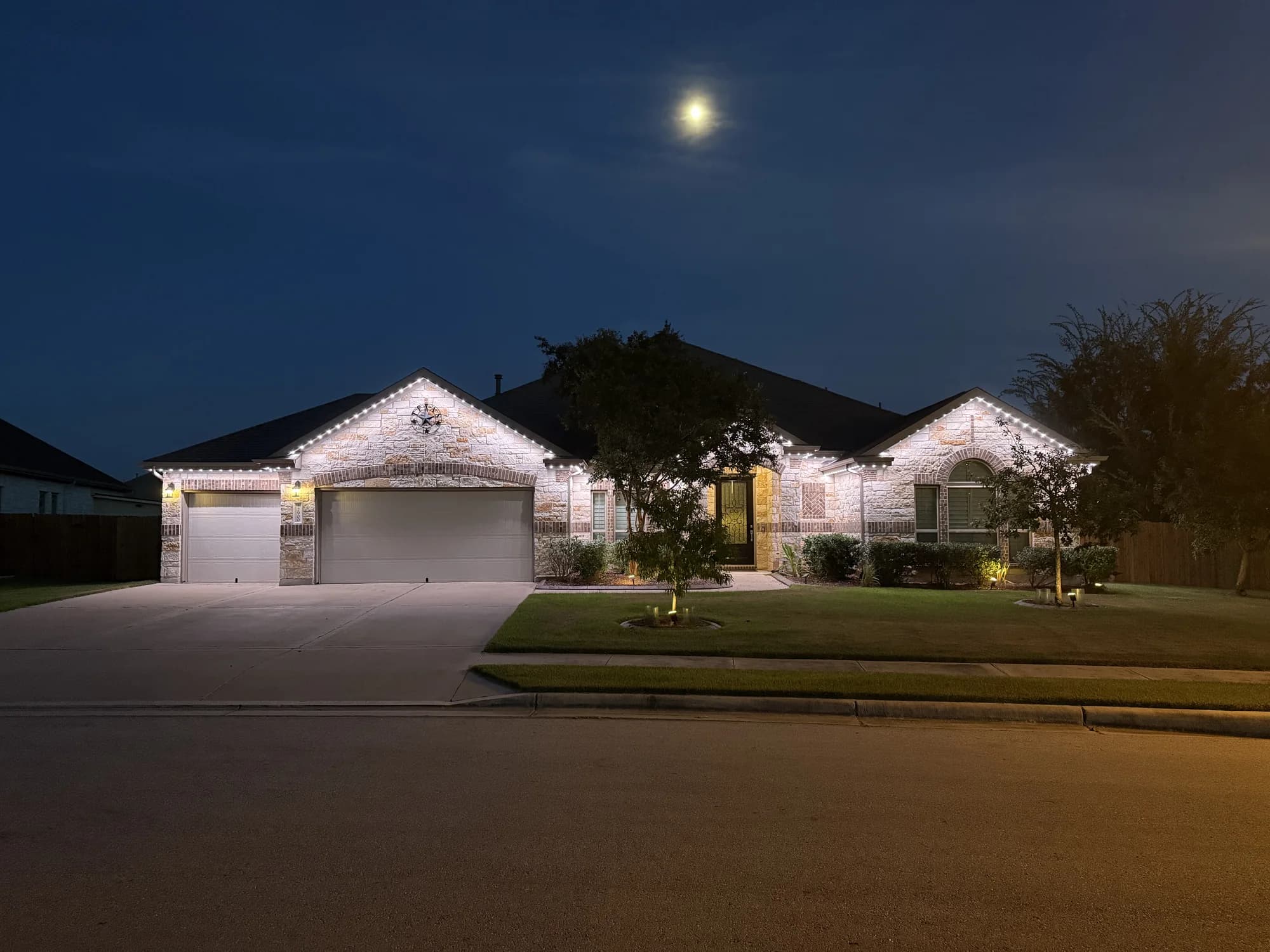
A separate motion floodlight can be a practical choice for a single area. Permanent lighting gives you another option when you also want roofline accent lighting and seasonal colors. The lights sit in track below the fascia or soffit, and motion can trigger the zones configured for it.
Compare the actual coverage, white-light output, controls, and installed price. A detached shed or workshop may still need its own fixture. Your dealer can explain which approach fits each part of the property.
TruLight’s fixtures have three RGB and three dedicated warm white LEDs. Ask to see the white-light setting and brightness you would use for motion response. Read the security lighting overview and ask the dealer which sensor functions are included in your quote.
Use motion alongside scenes and schedules
You might keep warm white accent lighting on until bedtime, then use motion to brighten a selected zone later at night. Choose the duration and brightness with your dealer, and confirm how the lights return to their scheduled scene.
The same lighting system can also display holiday colors and everyday accent lighting. Ask for a demonstration of the settings you expect to use. Confirm any alerts or automation features before relying on them; a general description of motion lighting is not a specification for every controller.
TruLight offers a limited lifetime warranty on the lighting modules and control box of dealer-installed systems. Read the warranty terms for the coverage period, registration, claims and exclusions.
Frequently asked questions
Are motion sensor outdoor lights worth the cost?
They can be useful when you want lighting to respond as you approach the house. Compare the installed cost and coverage with a separate motion fixture, especially if you are deciding whether you also want permanent roofline lighting.
Can I assign motion sensors to separate zones?
TruLight supports motion-sensor zones. Ask your dealer to show how the proposed sensors and zones will work on your property, including what happens when more than one sensor activates.
Will deer or pets trigger the lights?
They may. Tell the installer about animal traffic so they can consider sensor placement and sensitivity. Test the settings on site rather than assuming they will filter out every animal.
Can permanent lighting replace my existing floodlights?
It depends on the coverage and light levels you need. Have the installer check each area before removing an existing fixture, including detached buildings and paths beyond the roofline.
Find a local TruLight dealer to discuss the approaches you want lit and see a motion-lighting demonstration.
Related articles
- Is 48-Volt Permanent Outdoor Lighting Safe? The Engineering Breakdown
- Smart Outdoor Lighting Ideas For Homes
- TruLight vs. Trimlight vs. JellyFish: An Honest Comparison