Key takeaways
- TruLight is our pick for homeowners who want a true warm white and a true pure white from the same lights. It is the only system here with three full-size warm white LEDs next to three color LEDs in every light. TruLight makes one of these systems, so the ranking method is spelled out below.
- Voltage mostly decides how much hardware goes on your house. TruLight's 48V system goes roughly 400 lights between power injection points. 12V systems such as Gemstone and Trimlight need injection every 50 to 70 lights. Wire matters too: TruLight and JellyFish use tin-coated copper, and the other brands here do not say what their wire is made of.
- White light is where these systems differ most. JellyFish, Trimlight and Oelo mix white from red, green and blue. Gemstone, Bosso and Astoria add a smaller warm white section inside each diode, which gives a real warm white but not a true pure white. Their protruding lenses also leave a hot spot under each light and a scalloped arc between them, where a diffuser like TruLight's gives an even wash.
- Written coverage on this list goes from a consumer product policy to lifetime coverage tied to each part's rated life. What each warranty includes varies, so read the written terms before you sign.
- A taped-on kit you install yourself and a dealer-installed track system are different products. Govee is a fair choice for a budget self-install, and the other seven systems are professionally installed.
New to the terms? Our guide to RGB vs RGBW permanent lighting explains the white-light difference in plain language.
See true warm white on your own roofline
A certified TruLight dealer can quote your home and show you how many power injection points it needs.
Get a QuoteWhat permanent outdoor lighting actually is (and what it is not)
Permanent outdoor lighting is a set of individually controlled LED lights mounted along a roofline and left up all year. Professionally installed systems usually sit in a low-profile track below the fascia or under the soffit. EverLight mounts through the gutter or on eave caps instead. An app controls every light, so one system can do warm white for everyday architectural lighting, color for holidays and game days, and moving patterns for parties.
It is different from seasonal Christmas lights. Seasonal strings go up and come down every year. A permanent system stays in place and blends into the trim during the day.
It is also different from a DIY light strip. Professionally installed systems are sold through local installers who handle the install and service. DIY kits, such as Govee's, mount with tape and are installed by the homeowner. Both get called permanent lights, but they are built for different jobs, and this list includes one of each kind so you can see the trade-off.
Two specs matter more than any marketing term: the system voltage, which sets how often the lights need power injection, and the kind of white light the LEDs can make.
RGB, RGBWW and RGBW: why the white light differs
RGB lights (JellyFish, Trimlight, Oelo) have red, green and blue LEDs only. White is mixed from color, so it can come out with a tint.
RGBWW lights (Gemstone, Bosso, Astoria) split each diode into a color section and a smaller warm white section, about a quarter of the diode. They produce a genuine warm white. They cannot hold up a true pure white, because the small white section cannot keep pace when every channel fires at once.
TruLight's RGBW uses six full LEDs per light: three for color and three full-size warm white. Pure white comes from turning on all six at once.
Hot spots and scalloping: what a diffuser changes
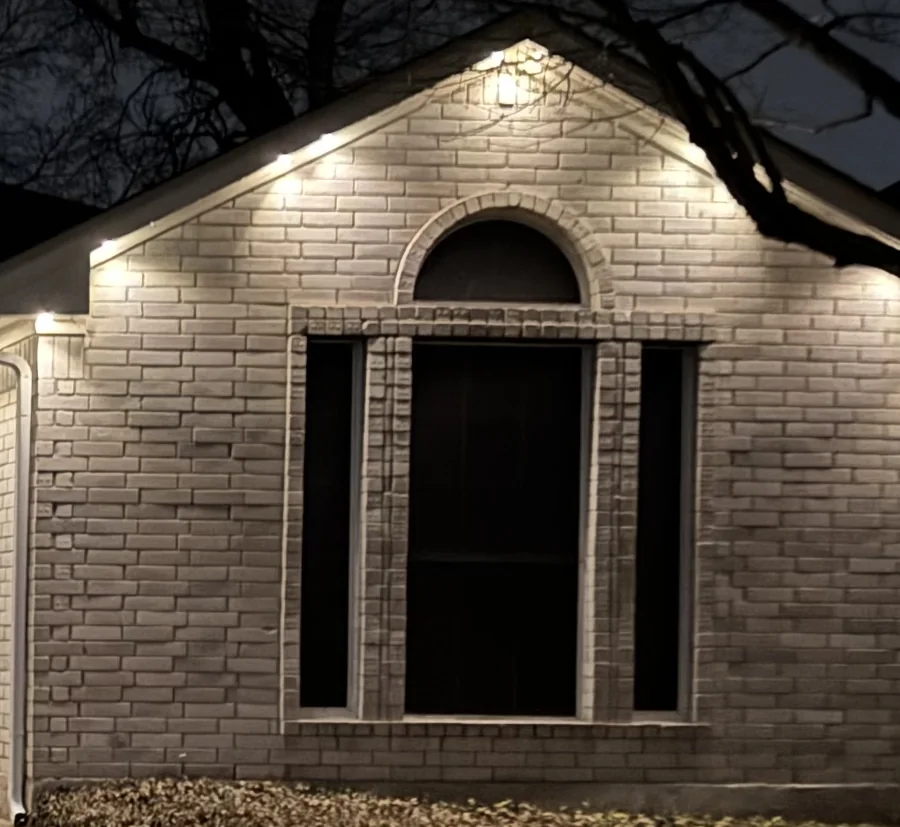
The lens on each light decides how the light lands on your wall. Gemstone, Bosso and Astoria are 12V systems that use a puck with protruding lenses. Those domes work like magnifiers: they concentrate modest output into a bright point so the system reads bright from the street. The price is a hot spot under every light and a scalloped, swooping arc on the wall between them.
A diffuser spreads the light instead. That costs some peak brightness, so only a system with output to spare can afford one. TruLight pairs a frosted diffuser with a 48V system, and JellyFish also pairs a real diffuser with 48V. The result is an even wash down the wall.
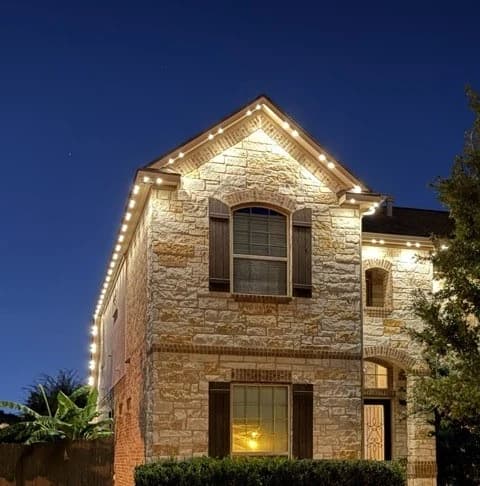
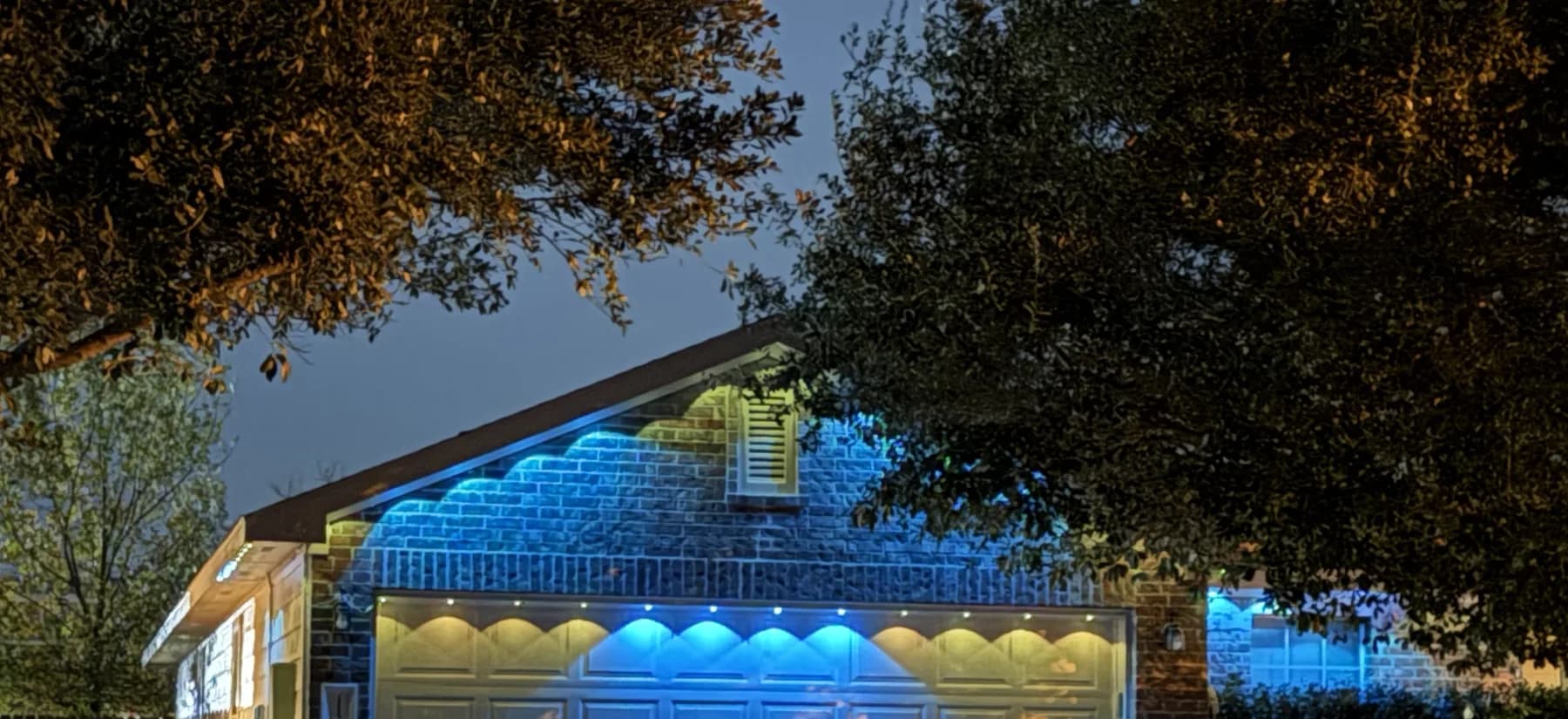
Here is the difference on two gables, each photographed from the street at night: a TruLight install on the left and a Gemstone install on the right.
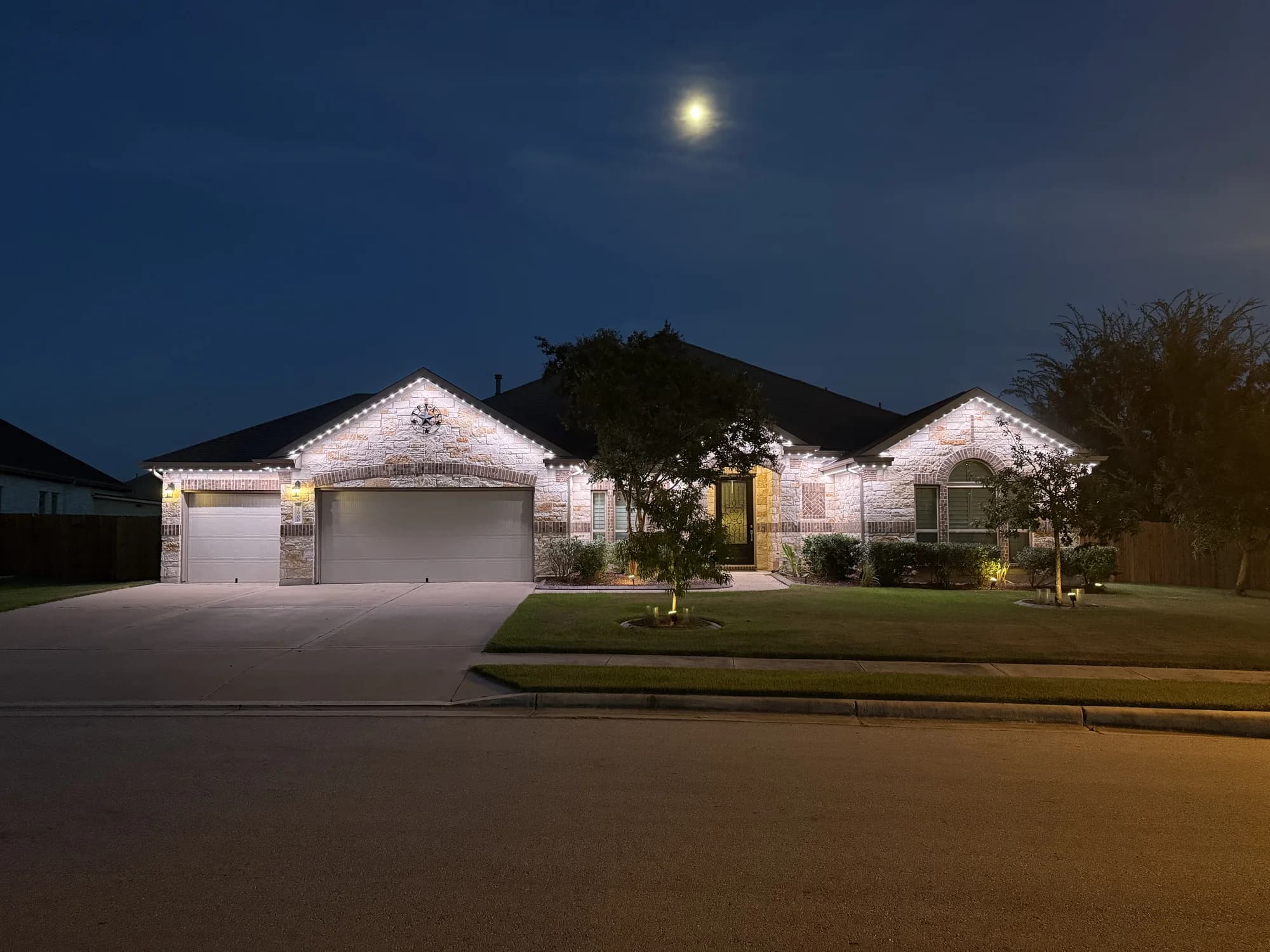
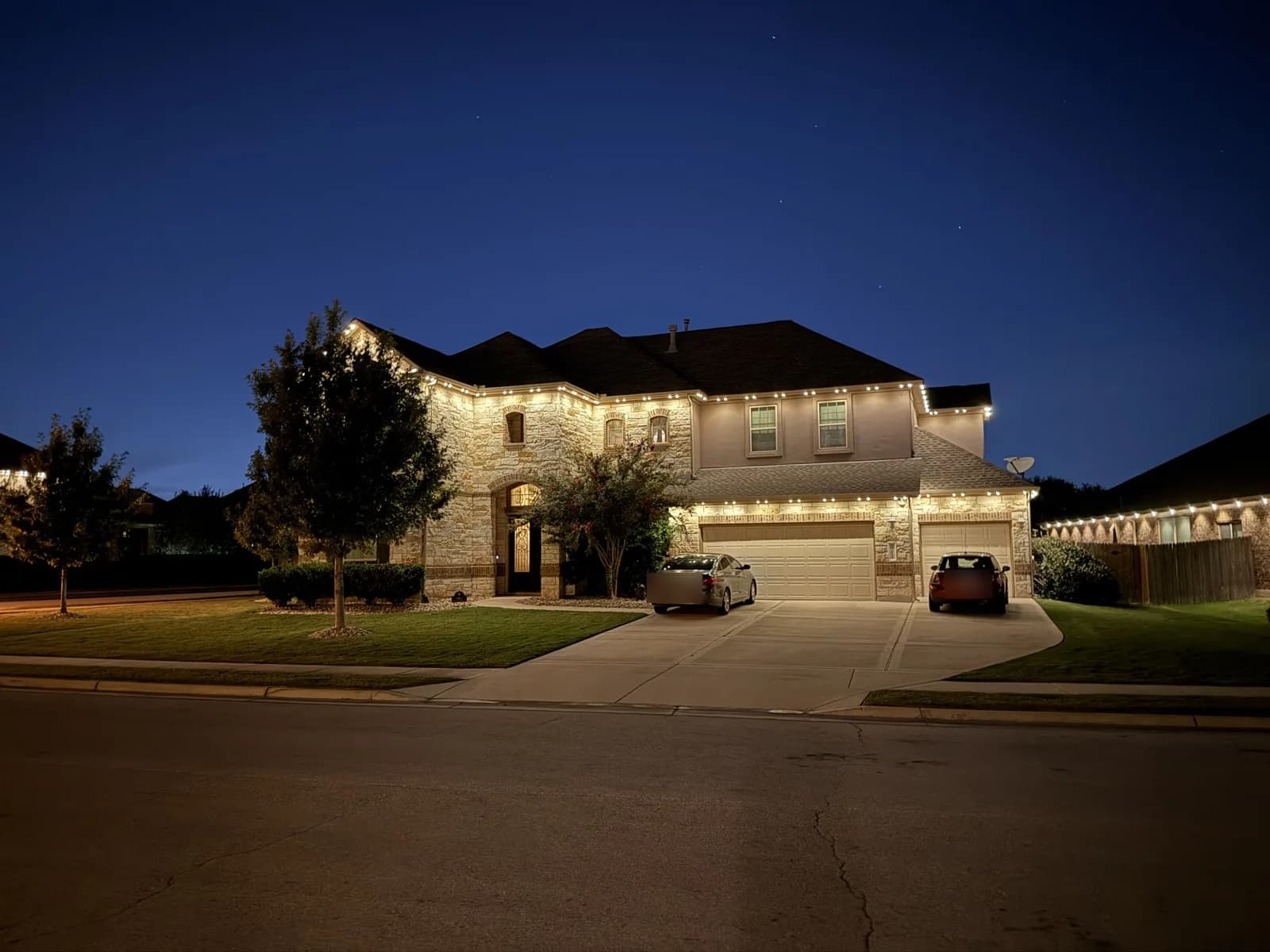
The same thing shows up between neighbors. This shot was taken on one Austin-area street on one night. The TruLight home is in warm white, and the house next door, at the right edge, has a protruding-lens system with a bright arc on the brick under every light.
Tinned copper wire: why the conductor matters
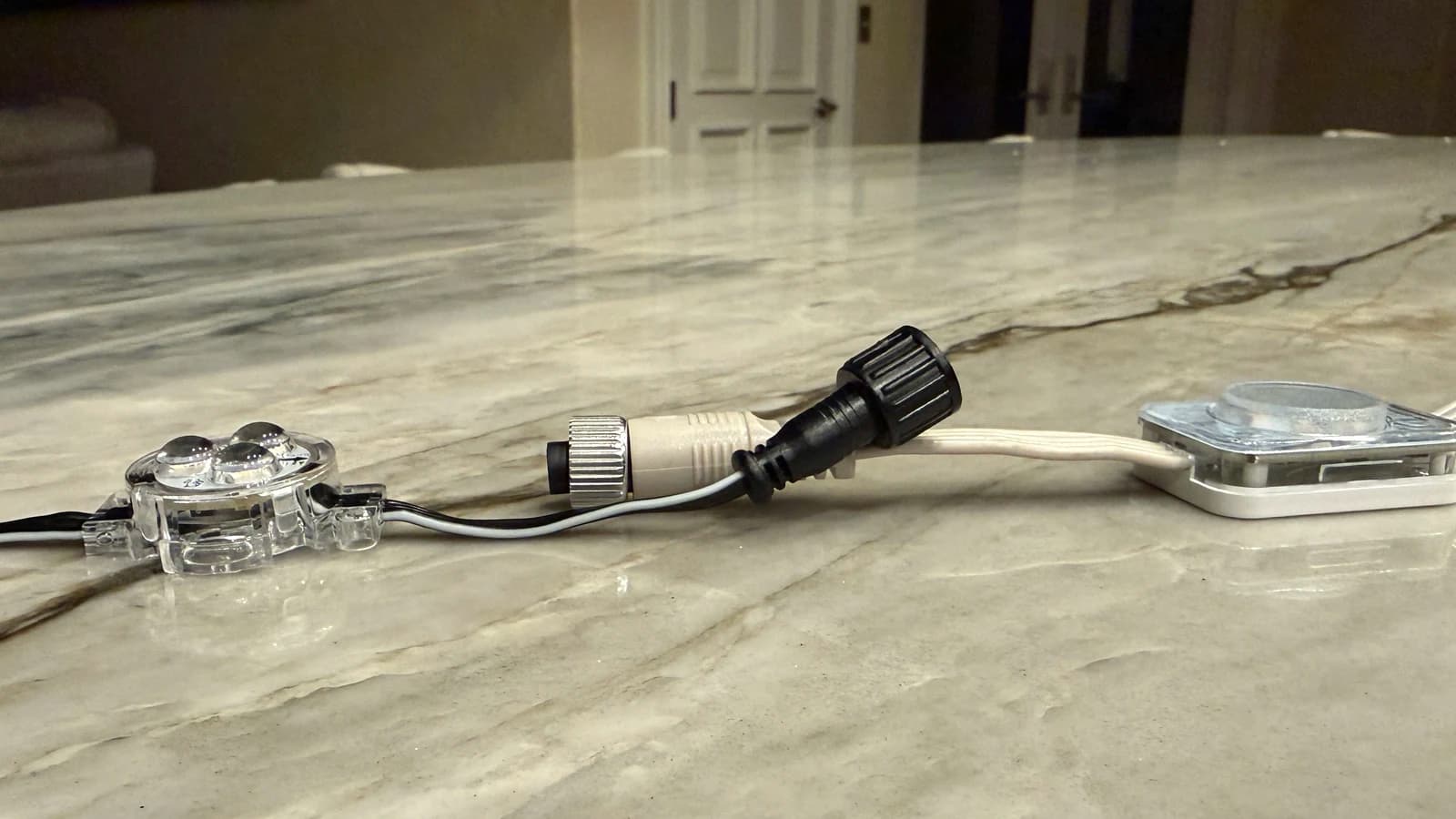
The wire in a roofline system sits outside for years, and moisture reaches the metal at cut ends, splices and connectors. Tinned copper is copper wire with a thin coating of tin. Bare copper is still the benchmark for conductivity, and the tin adds protection at those exposed points, which is why tinned copper is the kind of wire boat builders commonly choose for wet conditions.
New TruLight lights use 16-gauge tinned copper wire. JellyFish also markets tin-coated copper wire. The other brands on this list do not publish what their wire is made of, so ask any installer what conductor is inside the lights before you sign.
Tin does add a little resistance: roughly 4 to 6 percent more than bare copper at small gauges, according to the conductor tables in the National Electrical Code. On a 48V system that difference is small.
How we ranked these permanent lighting systems
- System voltage and power injection. Voltage sets how often the lights need a power injection point, which decides how many boxes go on the house and how complex the install is.
- White light. Whether each light has dedicated warm white LEDs, a split warm white section or no white at all, and whether it can make a true pure white.
- Wire. What the wire is made of, where the brand publishes it, and whether the cable has four wires with a redundant data line or three.
- Rated LED life. The hours each brand publishes for its LEDs.
- Written coverage. Which parts each brand's written warranty covers and for how long.
- App patterns. The number of moving patterns in the app.
How the list is ordered. TruLight is first because it is our pick and we make it. After TruLight, systems are listed by system voltage, highest first, and alphabetically when the voltage is the same. EverLight is placed by its newer 24V light. Position after TruLight reflects voltage only, so read the "best for" line on each entry to see who it fits.
Where the specs come from. Each brand's own published materials and our hands-on comparison videos. Every entry links to the full side-by-side comparison, where you can see the details and, where we filmed one, the video. We leave out pricing because installed prices vary by area and by installer.
The best permanent outdoor lighting in 2026
Eight systems made the shortlist: seven sold through professional installers and one DIY kit. Astoria, Bosso and Celebright appear in the comparison table further down.
1. TruLight, best for true warm white and pure white on a 48V system
TruLight is a 48V system with six LEDs in every light: three for color and three full-size warm white LEDs on a UCS7604 chip. Warm white comes from its own LEDs instead of a color mix, and pure white comes from turning on all six at once.
At 48V, TruLight goes roughly 400 lights between power injection points. New TruLight lights use 16-gauge tinned copper wire in a four-wire cable with a redundant data line. The app has 144+ moving patterns, music sync and true global zoning, and it has no subscription. The LEDs are rated for 100,000 hours, and every dealer-installed system carries a lifetime warranty, defined under the comparison table below.
TruLight is sold and installed through certified dealers. Dealers also sell DIY kits, and DIY kits are not covered by the TruLight warranty.
Best suited for: Homeowners who want everyday architectural white light as well as holiday color, and homes with long rooflines. If you only want colored scenes for a few weeks a year, a simpler RGB system may be enough.
Compare TruLight with every major brand
2. JellyFish, best for color-focused displays on a 48V, four-wire system
JellyFish is one of TruLight's closest competitors on hardware. JellyFish is also a 48V system on 16-gauge, four-wire cable with a redundant data line, and JellyFish markets its wire as tin-coated copper. Both systems offer true global zoning.
The difference is the light itself. JellyFish uses three RGB LEDs per light on an 8-bit Omega chip, an upgraded WS2811, with no white LED. Its white is blended from red, green and blue, which comes out with a cool blue tint. The JellyFish app offers 9 base animations with layered effects, and music sync needs a separate Music Box. JellyFish rates its LEDs at 50,000 hours and publishes a 5-year warranty.
Best suited for: Buyers who mainly want colored holiday and game-day scenes on a solid 48V build. If you want a true warm white for everyday lighting, compare the white light side by side first.
3. Govee, best for budget DIY installs
Govee is the DIY option on this list, sold at stores such as Costco, Home Depot and Amazon. Govee's permanent outdoor lights use one puck per node with no diffuser, spaced 24 inches apart on the model we reviewed, and they mount with 3M tape instead of an aluminum track.
The Govee system is 36V on three-wire cable, and Govee rates the LEDs at roughly 50,000 hours. The Govee app offers about 20 to 30 patterns. Govee covers the lights under its consumer product policy, not a warranty written for a permanent installation.
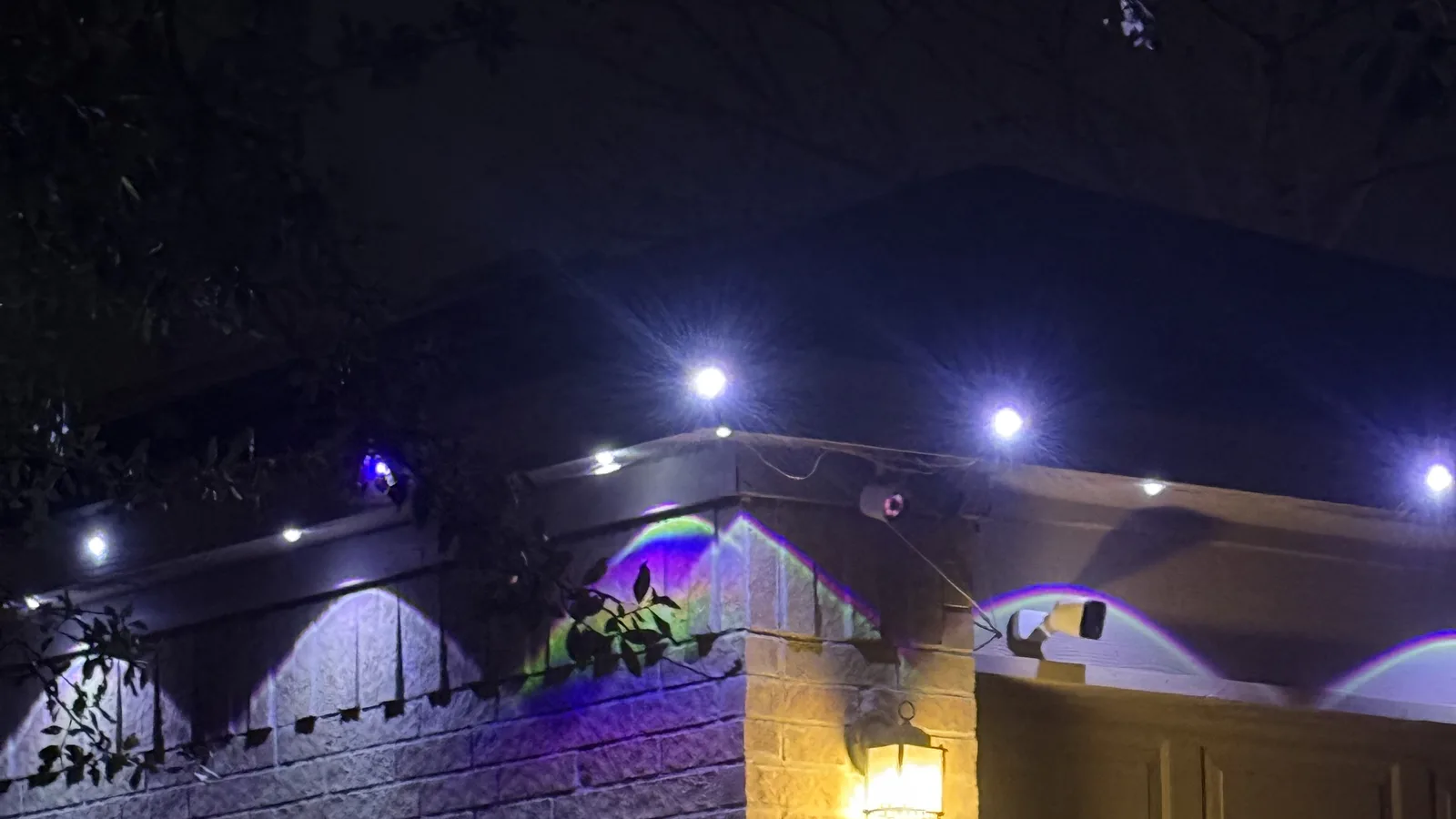
Without a diffuser, each Govee puck throws its own focused cone of light. With the wide spacing, that shows up as separate pools of light along the wall and arcs under the roofline, as the photos below show.
How a Govee install looks also depends a lot on which Govee line you buy. Govee's own guide says its standard RGBIC and Permanent Outdoor Lights 2 and Elite lines cannot be cut. Without cutting and splicing, each string stays in one piece, so at gaps and corners the wire and lights can end up looping across in the open unless the installer bridges them with Govee's connectors or extension cables.
Govee's higher-end Pro and Prism lines are built to be cut and spliced, but that takes more DIY skill: the guide has you cut between two lights, strip the wires, join them with connectors and keep every splice watertight. The daylight photos below show installs where the cable hangs loose across the roof, sits exposed on the soffit and jumps across corners in the open.
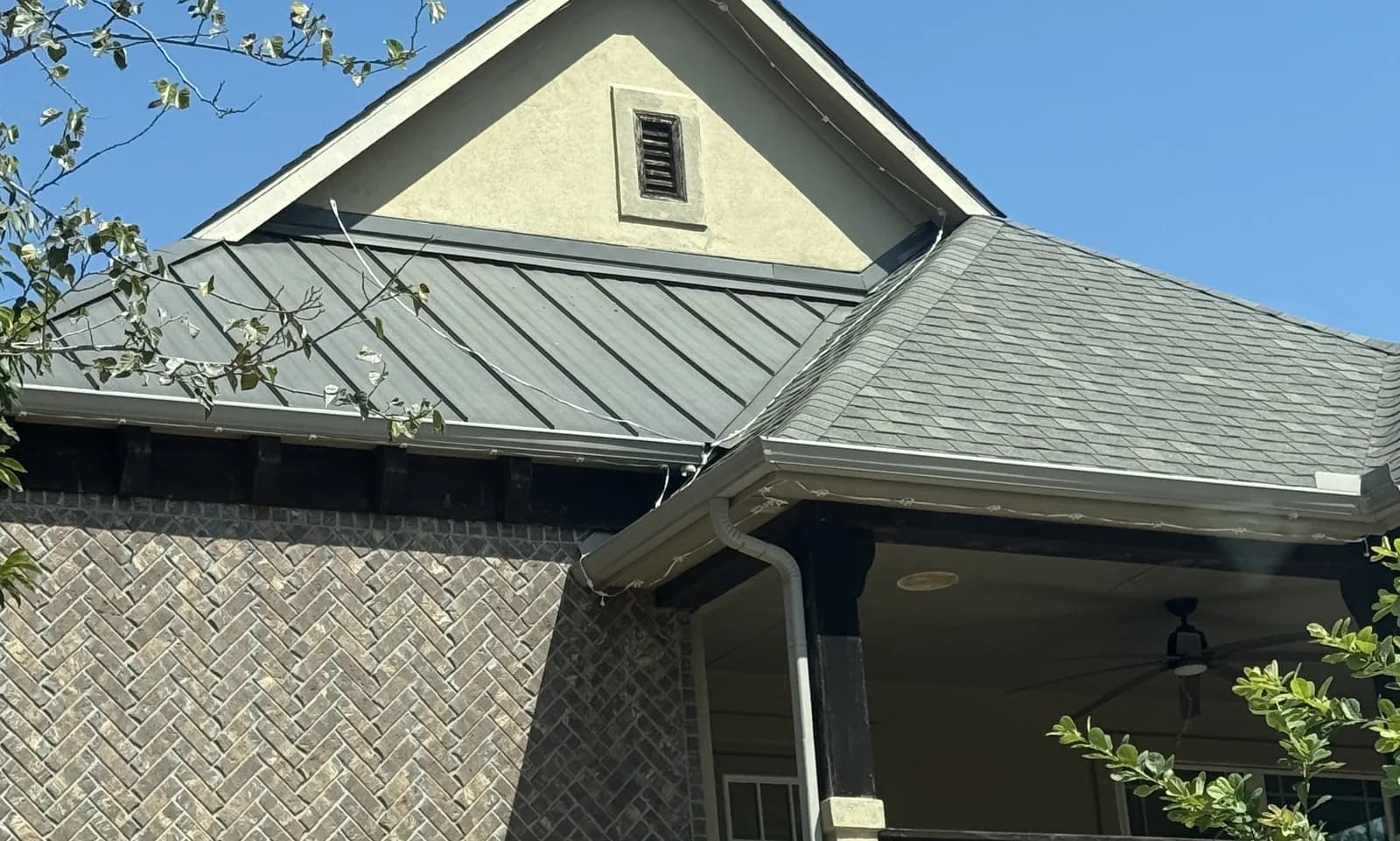
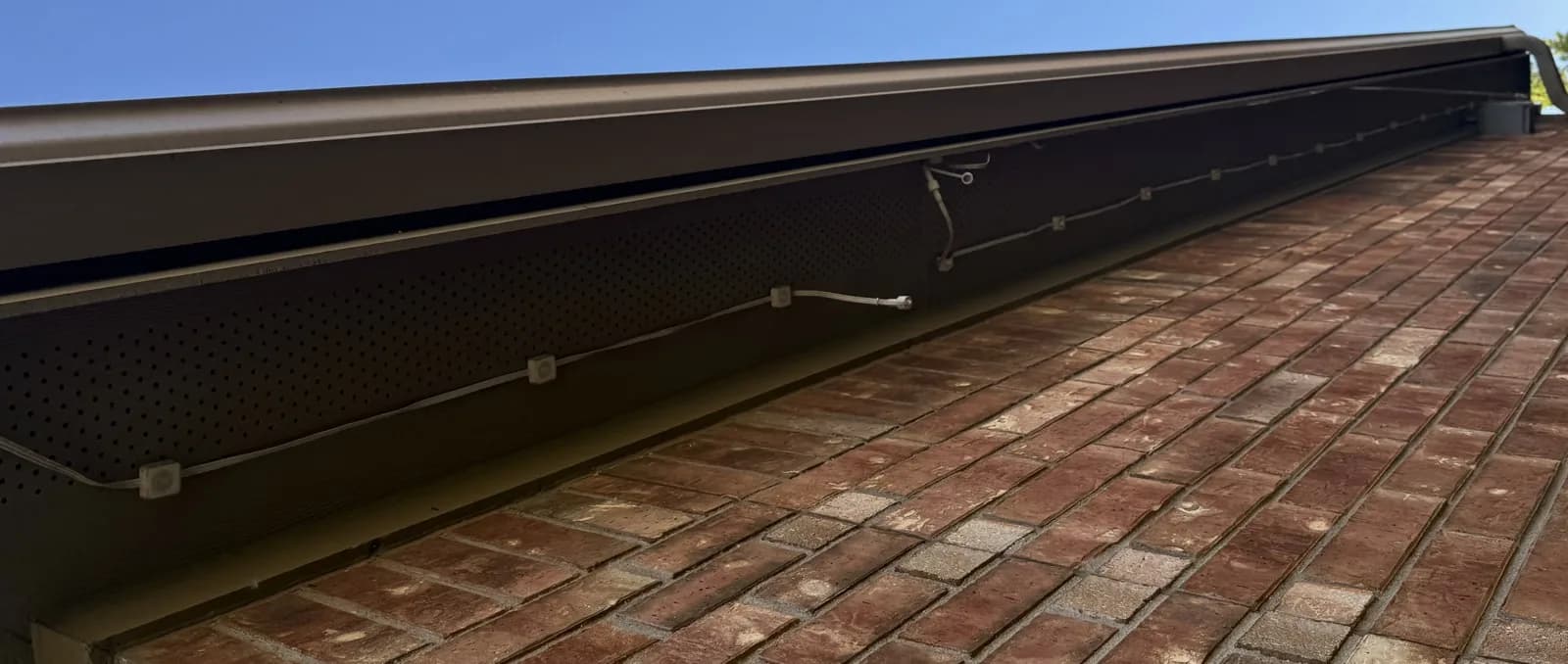
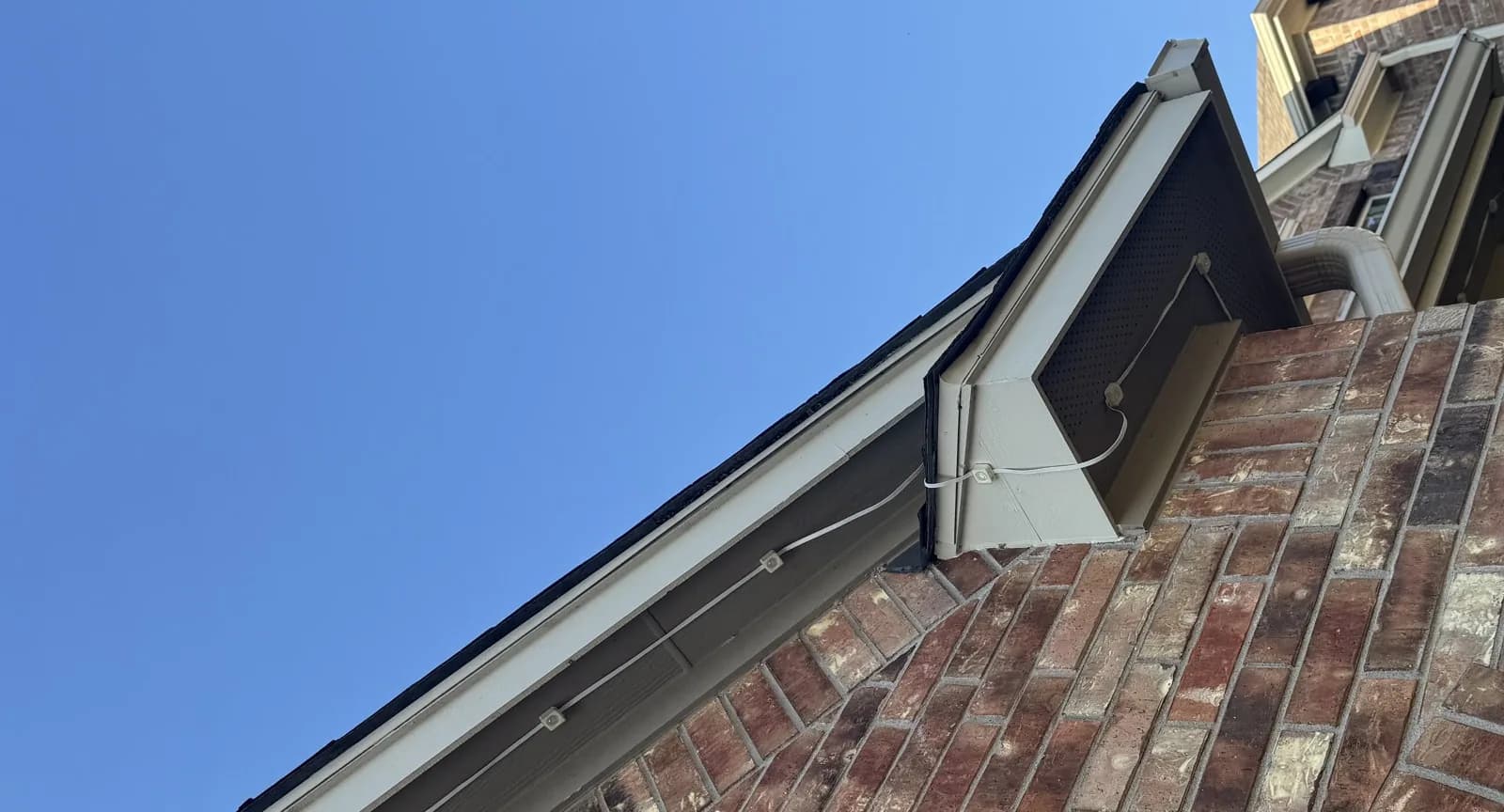
Best suited for: Renters, budget buyers and anyone comfortable doing their own install. If you want a professional install, a local dealer for service and tighter light spacing, look at the professionally installed systems on this list.
4. Oelo, best for long runs per controller
Oelo is a 36V system, one of the higher voltages in the category, and carries about 600 lights, roughly 500 feet, on a single Control Unit. Oelo rates its LEDs at 100,000 hours and publishes a 7-year warranty, transferable to one additional owner of the home.
Each Oelo light has two LEDs and no dedicated white channel, so white is mixed from color. The Oelo app offers 16 moving patterns and 55+ presets, with no built-in music sync. Oelo installs on aluminum track, and its installer network is well trained.
Best suited for: Homes with very long rooflines where colored holiday scenes plus a warm-ish white at night are enough. If you want a true warm white or pure white, compare the white light before you decide.
5. EverLight, best for buyers who want a brand with a long track record
EverLight has been around since 2014 and sells two different lights. The legacy light is a 5V light with three RGB LEDs, and it needs power injection every 10 to 50 lights. The newer 2025 light is 24V and adds smaller white sub-LEDs, so it does produce a real warm white.
EverLight's coverage depends on the light: 15 years on the legacy 5V light and 3 years on the newer 24V light. EverLight lights mount through the gutter or on eave caps, the EverLight controller has one port, and the app offers 13 patterns. EverLight music sync was not shipping at the time of our review.
Best suited for: Owners of an existing EverLight system who want to stay with the brand. If you are buying new, check which of the two EverLight lights a quote is for, because the white light and the coverage differ.
6. Haven Lights, best for commercial buildings and bold holiday displays
Haven Lights started in 2016 as a landscape lighting company. Haven's EVO roofline product is a light bar with a plexi diffuser in a C-channel track, on a 24V system.
The Haven app offers 28 fixed colors with no color wheel and no moving patterns, and Haven music sync is not available. Haven rates select LEDs at 30,000 hours. Haven's warranty on select LEDs is 5 years or 30,000 hours, whichever comes first, and most Haven products carry a 1-year limited warranty.
Best suited for: Commercial buildings and attention-getting holiday displays. Haven's EVO is less suited to lighting backyards, pools or gazebos, and buyers who want moving patterns will not find them here.
7. Gemstone, best for warm-white accent lighting on a 12V system
Gemstone is a 12V system that needs power injection every 50 to 70 lights. Each Gemstone light has three LEDs, and each diode includes a smaller warm white section that Gemstone markets as a "quarter light." That gives Gemstone a genuine warm white. What it cannot produce is a true pure white, because a quarter-size white section cannot keep up when every channel fires at once. Gemstone's protruding lenses also concentrate the light into a hot spot under each light, with a scalloped arc on the wall between them; the photos in the hot spots section above show it on a real home.
Gemstone uses 18-gauge, three-wire cable, rates its LEDs at 50,000 hours, and the Gemstone app offers 27 patterns. Gemstone publishes a lifetime warranty on its track lights based on a 50,000-hour rating, and 10 years on its power kits, controllers, extensions, cables, connectors and tracks.
Best suited for: Homeowners who want warm-white accents and holiday color from a 12V system. On a long roofline, ask how many power injection points the Gemstone quote includes.
8. Trimlight, best for basic holiday color
Trimlight has been around for over a decade and sells three RGB-only product lines. Its roofline systems are 12V and need power injection every 50 to 70 lights. No Trimlight product has a white LED, so Trimlight lights cannot make a true warm white or pure white.
Trimlight uses roughly 20-gauge, three-wire cable and rates its LEDs at 50,000 hours. The Trimlight app offers 10 to 12 patterns and 60 presets, and at the time of our video it was rated 2.9 on Apple and 2.8 on Google Play. Trimlight publishes a lifetime product warranty page; read the Trimlight terms for coverage, proration and labor.
Best suited for: Homeowners who want basic holiday color from a long-established brand. If you want white light for everyday use, Trimlight lights have no white LED.